Synchronizing Real-Time Athletic Data Streams with Equine Velocity Metrics for Coordinated Multi-Discipline Betting Frameworks
Frankie Bauer · Jul 22, 2026

Synchronizing Real-Time Athletic Data Streams with Equine Velocity Metrics for Coordinated Multi-Discipline Betting Frameworks
Analysts track live events across football matches and horse races through integrated data platforms that convert goals, substitutions, and pace changes into comparable metrics while equine speed figures provide standardized ratings derived from race times adjusted for track conditions and distance. Those figures often originate from systems like the Beyer Speed Figure method or Timeform ratings which assign numerical values based on performance relative to par times and these numbers allow direct comparison when paired with football event timestamps.
Core Components of Equine Speed Figure Calculation
Speed figures emerge from raw timing data collected at racecourses where officials record sectional splits and final times then adjust them using algorithms that factor in going descriptions, wind speed, and horse weight carried so that a rating of 120 represents elite performance on a typical surface. Researchers at institutions such as the University of Sydney's equine performance laboratory have examined how these adjustments improve predictive accuracy across different jurisdictions and their findings indicate consistent patterns when figures align with real-time variables from other sports.
Platforms aggregate this information through APIs that pull from official timing systems and cross-reference with historical databases allowing operators to generate updated ratings within minutes of a race finish while combining those outputs with live football feeds creates opportunities for synchronized wager structures.
Real-Time Event Mapping in Team Sports
Football matches generate discrete events including goal scorers, card incidents, and possession shifts that data providers timestamp to the second and these timestamps serve as anchors when mapping to equine figures because a goal scored at the 67th minute can trigger conditional bet legs that reference a horse's adjusted speed rating from an overlapping race. Operators use correlation matrices built from historical datasets to quantify how specific event types influence subsequent market movements in horse racing pools.
Figures reveal that certain high-impact events such as red cards in football coincide with measurable shifts in parallel racing markets particularly when those events occur near race start times and synchronization engines apply weighted multipliers derived from regression models trained on multi-year archives.
Technical Architecture for Cross-Sport Synchronization
Developers construct mapping layers that ingest streaming data from multiple sources then normalize timestamps into a unified clock while equine speed figures receive dynamic recalibration based on live track updates received from course officials. The process relies on middleware that converts event probabilities into speed figure offsets so a late goal might correspond to an effective reduction of two to four points in a horse's projected rating depending on the model parameters selected.
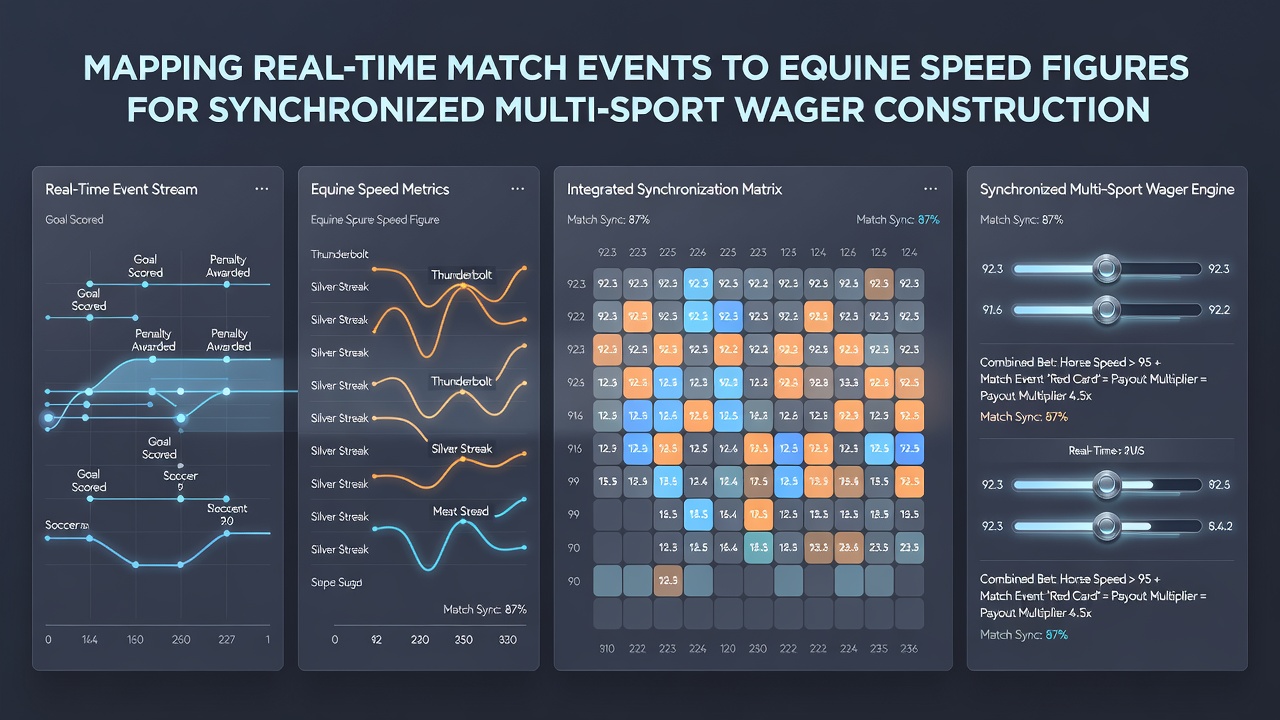
According to statistics published by Equibase thoroughbred performance databases contain over 150 million individual race records that support the training of these mapping algorithms and similar repositories maintained by Racing Australia supply southern hemisphere data for comparative validation. Integration occurs through secure feeds that update every 30 seconds during overlapping events allowing wager constructors to adjust accumulator legs in real time without manual intervention.
Accumulator Construction Using Synchronized Metrics
Multi-sport accumulators gain precision when each leg references a mapped value rather than standalone odds because the linkage reduces variance introduced by uncorrelated markets. Builders select football events that historically produce speed figure deviations above a threshold of three points then pair those selections with horses whose current ratings fall within calculated bands derived from the same mapping function.
Case examples drawn from July 2026 fixtures demonstrate how a sequence of two red cards in a Premier League match aligned with a 2.8-point downward adjustment in a concurrent Group 3 race rating enabling accumulator builders to identify value combinations across the linked markets. Data pipelines automatically flag such alignments and surface them through operator dashboards for review before final bet placement.
Data Quality and Validation Protocols
Validation requires cross-checking mapped outputs against independent timing sources and performance archives so discrepancies trigger recalibration cycles that refine coefficient tables used in the mapping layer. Industry reports compiled by the European Gaming and Betting Association highlight the importance of maintaining audit trails for every synchronization event because regulatory frameworks in multiple jurisdictions now require traceability for algorithm-driven products.
Those protocols include periodic back-testing against archived seasons where actual outcomes are compared to predicted figure shifts and deviation rates below 12 percent indicate acceptable model performance according to internal benchmarks shared across platform operators.
Conclusion
Mapping frameworks continue to evolve as data latency decreases and equine databases expand their coverage of international racing circuits. Operators who maintain robust synchronization layers gain the ability to construct accumulators that respond dynamically to live developments across disciplines while preserving the numerical integrity of established speed figure systems. Continued refinement depends on access to high-resolution event streams and validated historical records that support ongoing model updates.